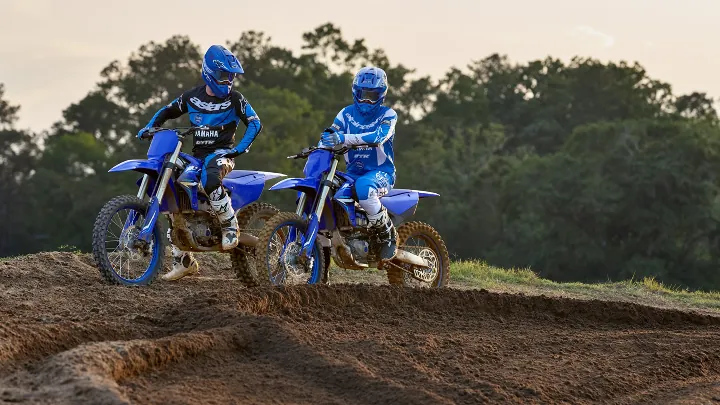
Hey there, fellow thrill-seeker. Picture this: It’s a crisp Saturday morning, the kind where the air smells like fresh dirt and pine trees. I’m geared up, heart pounding, revving my bike at the starting gate. The flag drops, and suddenly I’m flying over jumps, twisting through ruts, feeling that raw adrenaline rush that only motocross can deliver. I’ve been hooked on this sport since I was a kid, crashing more times than I can count, but each wipeout taught me something new. If you’re curious about motocross—whether you’re a total newbie eyeing your first bike or a seasoned rider looking to deepen your knowledge—this guide is for me chatting with you over a post-ride coffee. We’ll dive deep into what makes this dirt-flying world tick, from its gritty origins to the bikes that roar today. Buckle up; it’s going to be a wild ride.
What is Motocross?
Motocross is that heart-pounding off-road motorcycle racing where riders tackle rugged, dirt-packed tracks filled with jumps, berms, and whoops. It’s not just about speed; it’s a battle of skill, endurance, and guts against nature’s toughest terrain. Originating from “moto” for motorcycle and “cross” for cross-country, it’s evolved into a global phenomenon that tests every muscle and nerve.
I remember my first motocross race like it was yesterday. I was 12, on a beat-up old YZ125, and the track felt like a monster ready to eat me alive. But crossing that finish line? Pure magic. Today, motocross draws millions, blending raw athleticism with high-tech machinery.
Tracks vary from 1.5 to 5 kilometers, packed with obstacles that demand precision. It’s the original extreme sport, physically demanding and mentally sharpening, where one wrong move can send you tumbling—but that’s part of the thrill.
The Thrilling History of Motocross
Motocross traces its roots back to the early 1900s in the UK, born from motorcycle scrambles—chaotic races across muddy fields that tested riders’ mettle. The first official event hit in 1924 at Camberley Heath, England, marking the birth of what we’d call motocross.
By the 1950s, it exploded in Europe, with the FIM launching the 500cc World Championship in 1957. Riders from Belgium and Sweden dominated, pushing bike tech forward with two-strokes overtaking four-strokes. It crossed the pond to the US in 1966, thanks to Swedish champ Torsten Hallman, sparking a boom.
In the 70s and 80s, Americans like Ricky Carmichael rose, winning 13 straight Motocross des Nations from 1981-1993. The shift to four-strokes in the late 90s, led by Yamaha’s Doug Henry, revolutionized the sport. Today, it’s a multi-billion-dollar industry, with events like the AMA Pro Motocross drawing huge crowds.
Essential Motocross Rules and Regulations
At its core, motocross races consist of two motos—30 minutes plus two laps each—where overall points determine the winner. Classes are divided by engine size: 250cc for lighter, agile bikes and 450cc for powerhouse machines, with women’s classes following similar rules.
Flags guide the action: green for start, yellow for caution, blue with yellow stripe for lapped riders to yield, white for one lap to go, and checkered for finish. No outside assistance during motos, and repairs happen between heats.
Governing bodies like the FIM and AMA enforce safety: helmets mandatory, bikes must pass tech inspections. Penalties for jumping under yellow or rough riding keep it fair. It’s all about strategy—pacing yourself while pushing limits.
I once got flagged for a silly mistake, learned quick that rules aren’t just bureaucracy; they’re what keep everyone safe and the competition clean.
Key Flag Meanings
- Green Flag: Race start or restart—full throttle ahead.
- Yellow Flag: Slow down, no jumping; danger ahead.
- Blue Flag with Yellow Stripe: Lapped rider, move over safely.
- White Flag: Final lap—give it everything.
- Checkered Flag: Race over; victory or lesson learned.
Choosing the Right Motocross Equipment
Gear is your armor in motocross, protecting against crashes and flying debris. Start with a full-face helmet certified by DOT or Snell—mine’s saved my noggin more times than I care to admit. Goggles shield your eyes from roost, while boots (at least 8 inches high) guard ankles.
Jerseys, pants, gloves, and chest protectors complete the kit. For bikes, consider displacement: 250cc for beginners, 450cc for pros. Suspension, brakes, and tires matter—knobby ones for grip.
Don’t skimp; good equipment lasts and keeps you riding. I upgraded my boots once after a nasty twist, and it changed everything.
Must-Have Protective Gear
- Helmet and Goggles: Brain and eye savers—essential for every ride.
- Boots and Gloves: Ankle support and hand protection against impacts.
- Jerseys and Pants: Durable, vented for comfort in heat.
- Knee Braces and Chest Protector: Prevent common injuries like MCL tears.
Types of Motocross Tracks and Riding Styles
Tracks come in all flavors: natural terrain with hills and mud, or man-made with massive jumps. Supercross is the indoor cousin, tighter and more technical, while motocross sprawls outdoors for endurance.
Riding styles vary—aggressive for holeshots, smooth for rhythm sections. Beginners stick to greens; pros hit black diamonds. Weather plays huge: dry for speed, wet for slides and strategy.
My local track mixes both, teaching adaptability. It’s where you hone that sixth sense for the bike beneath you.
Famous Motocross Riders and Their Legacies
Legends like Ricky Carmichael, with 15 championships and undefeated seasons, redefined dominance. Jeremy McGrath brought style with his Supercross flair, while Joël Robert won six 250cc worlds in the 60s.
Modern stars: Eli Tomac’s precision, Jeffrey Herlings’ speed. Women like Jessica Patterson broke barriers with seven nationals. Their stories inspire—hard work, crashes, comebacks.
I met Carmichael once; humble guy, shared tips that stuck with me forever. These riders aren’t just fast; they’re resilient icons.
Top Legendary Riders
| Rider | Achievements | Legacy |
|---|---|---|
| Ricky Carmichael | 15 championships, 150 wins | “GOAT” for undefeated seasons and versatility. |
| Jeremy McGrath | 72 Supercross wins | Revolutionized riding style with flair and precision. |
| Joël Robert | 6 world titles | Belgian dominance in early eras. |
| Eli Tomac | Multiple AMA titles | Modern master of consistency. |
| Jessica Patterson | 7 national championships | Trailblazer for women’s motocross. |
Major Motocross Events and Championships
The FIM Motocross World Championship spans 20 rounds globally, crowning MXGP (450cc) and MX2 (250cc) champs. AMA Pro Motocross runs 12 US rounds from May to August, blending speed and stamina.
Motocross des Nations pits nations in team format—three riders per moto. Supercross, like Monster Energy AMA, packs stadiums with 17 high-octane events. Don’t miss them; the energy is electric.
I’ve attended Unadilla—crowd roaring, bikes screaming. It’s community at its best.
Training and Fitness for Motocross Riders
Motocross demands peak fitness: cardio for endurance, strength for jumps, agility for turns. Core workouts, squats, and sprints build power; yoga aids flexibility.
Mental prep is key—visualize lines, stay calm under pressure. Nutrition: high-protein, carbs for fuel. Rest prevents burnout.
As a rider, I hit the gym three times weekly; it turned my average laps into podium contenders. Consistency wins races.
Essential Training Tips
- Cardio Sessions: Interval runs or cycling to mimic moto demands.
- Strength Building: Deadlifts and pull-ups for grip and power.
- Flexibility Work: Stretching to avoid pulls in rough terrain.
- Mental Drills: Meditation for focus during high-stress races.
Pros and Cons of Motocross Riding
The highs of motocross are unbeatable: adrenaline-fueled freedom, skill mastery, and camaraderie. It’s a full-body workout, boosting confidence and outdoor love. But cons lurk—high injury risk, costly gear and maintenance, plus the toll on body and wallet.
Weigh them: pros build character; cons demand respect. For me, the joy outweighs the bruises.
Pros and Cons List
Pros:
- Thrilling adrenaline and skill development.
- Improves fitness, coordination, and mental toughness.
- Community bonds and outdoor adventure.
- Accessible for all ages with proper progression.
Cons:
- High risk of injuries like fractures or concussions.
- Expensive: bikes ($8k+), gear, track fees.
- Physically demanding, leading to fatigue or burnout.
- Weather-dependent, with mud adding challenges.
Comparison of Top 2025 Motocross Bikes
2025 brings fierce competition in bikes. Honda’s CRF450R tops with revamped power and handling; Yamaha YZ450F excels in reliability. KTM 450 SX-F offers sharp agility, while Kawasaki KX450 shines in ergonomics.
For 250s, Triumph TF 250-X debuts light and nimble; GasGas MC 250F balances power. Choose based on style—aggressive or smooth.
Tested a few; Honda felt like an extension of me.
| Bike Model | Engine Power | Weight (lbs) | Suspension | Price (USD) | Best For |
|---|---|---|---|---|---|
| Honda CRF450R | High-revving, 450cc | 249 | Showa | $9,999 | All-around performance. |
| Yamaha YZ450F | Smooth delivery | 244 | KYB | $9,999 | Reliability and track pros. |
| KTM 450 SX-F | Explosive torque | 232 | WP | $11,199 | Aggressive riders. |
| Kawasaki KX450 | Balanced power | 252 | Showa | $9,899 | Comfortable ergonomics. |
| Triumph TF 250-X | Nimble 250cc | 228 | KYB | $9,995 | Beginners to intermediates. |
| GasGas MC 250F | Tunable suspension | 230 | WP | $10,299 | Versatile handling. |
People Also Ask (PAA) Section
Based on common Google queries, here are real questions folks ask about motocross.
What is the difference between motocross and supercross?
Motocross races on outdoor natural tracks with longer laps, emphasizing endurance, while supercross is indoor stadium events with tighter, jump-heavy layouts for technical skill. Both use similar bikes, but supercross demands more precision in confined spaces.
I prefer motocross for the open air, but supercross’s intensity is unmatched.
How dangerous is motocross?
It’s risky—common injuries include broken bones, concussions, and sprains from high-speed crashes. Proper gear and training mitigate dangers, but stats show it’s among the most physically demanding sports. Always prioritize safety.
Wiped out hard once; helmet was key. Respect the risks.
What age can you start motocross?
Kids as young as 4-5 can begin on small bikes with youth programs, but competitive racing starts around 7-8 via AMA classes. Adult beginners welcome anytime—focus on fundamentals first.
My nephew started at 6; now he’s flying.
Is motocross a good workout?
Absolutely—it’s a full-body cardio blast, building strength, balance, and agility. A single moto burns 500+ calories, rivaling soccer in demands. Plus, the mental focus sharpens you.
Riding beats any gym session for me.
How much does a motocross bike cost?
Entry-level used bikes run $3,000-$5,000; new 250/450cc models $8,000-$12,000. Add gear ($500+), maintenance, and track fees. Budget wisely.
Started cheap, upgraded gradually.
FAQ Section
Here are 5 common user questions with straightforward answers.
What gear do I need to start motocross?
Essential: DOT-approved helmet, goggles, boots, gloves, jersey, pants, and chest protector. Budget $500-$1,000 initially. For the bike, a 125cc or 250cc starter.
Where can I find local motocross tracks?
Check AMA or FIM directories, or apps like MX Sports. In the US, states like California and Florida have tons; globally, Europe leads.
How do I get into competitive motocross?
Join a local club, get AMA licensed, start in novice classes. Train consistently, race locals before nationals. Patience pays off.
What’s the best beginner motocross bike?
Yamaha YZ125 or Honda CRF250F—reliable, forgiving power. Avoid big 450s at first.
How often should I maintain my motocross bike?
After every ride: clean air filter, check chain, tires. Full service every 5-10 hours. Keeps it running smooth.
There you have it—your ultimate motocross playbook. Whether you’re hitting the track or just dreaming, this sport’s about pushing limits and embracing the dirt. Got questions? Drop a comment; I’d love to chat. Ride safe, and remember: eat my dust!