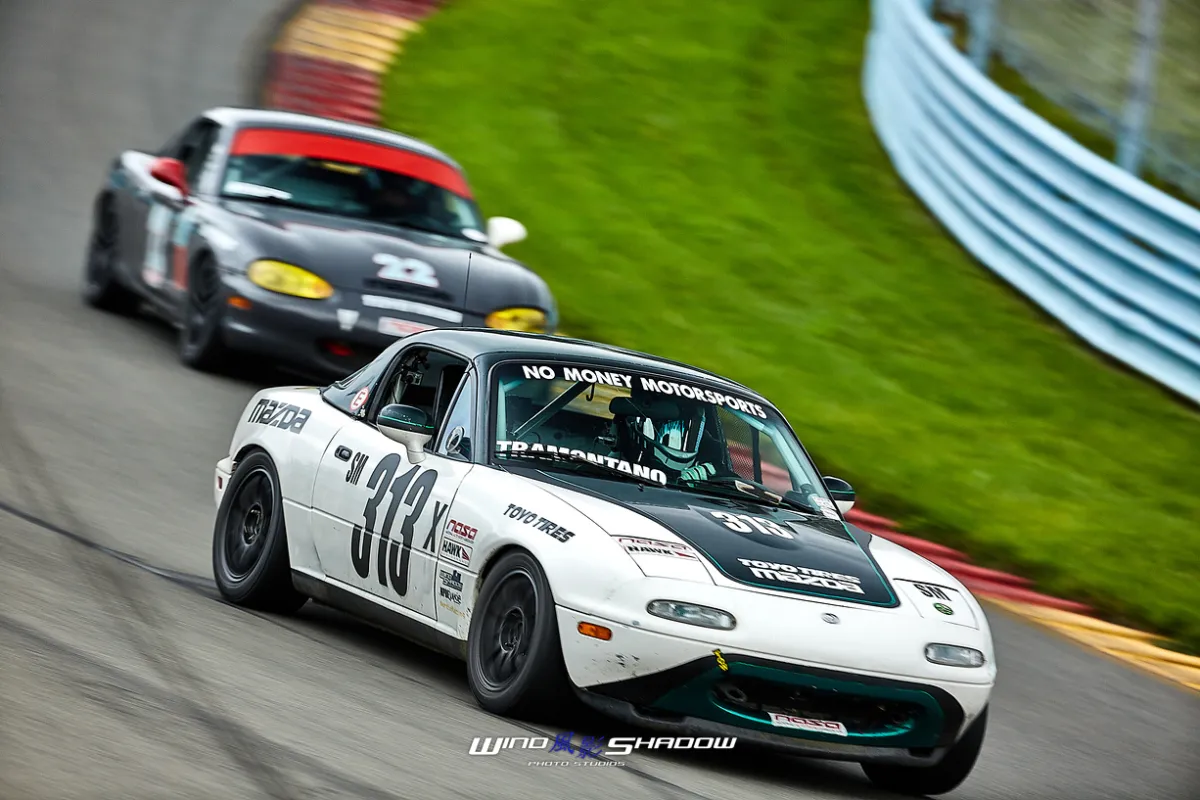
Hey there, fellow gearhead. Picture this: You’re at the track, the sun’s dipping low, and you’re squeezing every ounce of thrill out of a nimble little Mazda MX-5, battling door-to-door with a pack of like-minded racers. No massive budgets, no fancy crews—just pure, heart-pounding fun. That’s Spec Miata racing for you. I’ve been in the seat for years now, clinching a NASA Northeast championship in 2023 on a shoestring, and let me tell you, the rumors of sky-high costs? They’re mostly hot air. If you’re eyeing entry into this addictive world of club racing, stick with me. We’ll break it down real, based on my own gritty experiences and chats with paddock buddies, so you can hit the grid without breaking the bank.
What Is Spec Miata Racing?
Spec Miata is the ultimate grassroots racing class, turning everyday Mazda MX-5s into spec’d-out competitors under tight rules from bodies like NASA and SCCA. It’s all about equalizing the field—no big engine swaps or wild mods allowed—so driver skill shines. I remember my first race; the car felt alive, corners biting like a dream, and the pack so tight you could hear everyone’s breathing. It’s affordable entry-level racing that packs pro-level excitement, drawing huge fields across the U.S. From regional skirmishes to national showdowns, it’s where newbies and vets mix it up on a budget.
Think of it as the people’s choice in motorsports: Light, reliable Miatas with stock-ish power (around 130-140 hp) that last forever if you treat ’em right. Mazda backs it big-time with parts and contingencies, keeping costs low. No wonder it’s the most popular club racing class—close battles, low drama, high adrenaline.
Why Spec Miata Stands Out in Budget Racing
What sets Spec Miata apart? It’s the sweet spot of cost, competition, and community that keeps racers coming back. In my seven years wheeling one, I’ve seen folks drop from other classes because the Miata delivers more bang without the wallet drain. You get massive fields—20-plus cars per race in competitive regions—meaning non-stop action, win or mid-pack. And the rules? Strict specs mean no arms race; it’s about your left foot and smooth lines, not deep pockets.
Humor me here: Ever tried racing something heavier, thirstier, and pricier? I did once in a borrowed open-wheel car—fun, but the tire bill alone could’ve bought me a season of Miata fun. Spec Miata’s genius is in the simplicity: Cheap blanks for rotors, long-life Toyo tires, and engines that go seasons without a rebuild. Plus, the paddock vibe? It’s like a family reunion with wrenches—everyone shares spares, tips, and even pizza (more on that later). For entry-level racers, it’s the gateway that feels like the main event.
Breaking Down the Initial Costs: Getting Your Spec Miata Ready to Race
Diving into the startup, the big question is the car itself. Used Spec Miatas ready to roll go from $6,000 for a basic beater to $45,000 for a championship contender. I snagged mine for under $10k—a solid NA model with a fresh cage and reliable motor—and it carried me to podiums. Don’t build from scratch unless you’re handy; shops charge $55-60k for top-tier, but that’s overkill for starters. Factor in safety gear: Helmet ($500), suit ($800), harness ($300)—total around $2,000 if you’re frugal.
Then there’s the tow rig and trailer. I started with a used SUV and open trailer for $5,000 combined; no need for a dually unless you’re hauling a palace. Tools? Basic set from Harbor Freight for $300 gets you wrenching at home. My first build night? Sweaty, swear-filled, but rewarding—ended with a beer and a grin. Total entry: $15-25k if you’re smart, way less than the $50k myths floating around forums like MazdaRacers.com.
Ongoing Seasonal Expenses: What Really Adds Up
Once you’re in, the real magic happens—Spec Miata’s low running costs shine. A full season (8-10 weekends) can run under $10k, like my 2023 tally of $7,000 for 20-car fields and a title. Entry fees? $300-500 per weekend, covering tech and races. Tires: One fresh Toyo RR set ($700) lasts the year, plus scrubs from paddock swaps. Brakes? $100 fronts, $50 rears per season. Fuel? $100-200/weekend, depending on practice laps.
Maintenance is minimal: Oil changes ($50 each), alignments ($100/year). I skipped fancy data loggers early on, saving hundreds. Contingencies from Mazda? I won free tires mid-season—sweet! But watch for crashes; minor fixes are cheap ($200-500), but big ones sting. My tip: Camp at tracks to slash lodging ($0 vs. $200/night). It’s not free, but with smart choices, it’s doable on a regular job’s salary.
Entry Fees and Memberships
NASA membership and license? $179/year—your ticket to the show. Regional events run $350-450 for a double-header weekend, including practice. SCCA’s similar, around $400. I worked corners early to offset fees, turning sweat into savings. No hidden gouges; it’s straightforward, and big fields mean value.
Consumables: Tires, Brakes, and Fluids
Tires dominate here, but Spec Miata’s light weight helps. Toyo RRs ($225 each) grip forever; I ran one set plus used ones all season. Brakes last: Two front sets ($200 total), one rear. Fluids? $50/year. Pro tip: Shave tires yourself for practice—saves big. It’s these details that keep budgets under control.
Travel and Logistics Costs
Towing cross-state? Gas for 500 miles: $150 round-trip. Trailers eat $50-100 in maintenance yearly. I carpool with buddies, splitting costs and stories. Hotels? Skip ’em—camping’s free and builds bonds. My longest haul to VIR? Epic road trip, zero regrets, under $300 total.
My Personal Story: Racing on a Shoestring and Winning Big
Let me get real for a sec. Back in 2023, I was juggling a day job, family, and this racing bug. Budget? Tight—$7k for the season, including extras. Started with pizza nights at the track (my oven’s a paddock star, costs $50-100 in dough but pays in friendships). No crashes, smart spares, and voila: Northeast champ. One race, I nursed worn tires to a win, heart in my throat—pure joy. It’s emotional; that checkered flag? Tears and hugs. Light humor: I once fixed a loose bolt with duct tape mid-qual—worked, but don’t tell the tech guy. These stories prove it’s possible; I’ve seen rookies do it too.
Cost-Saving Tips from the Paddock Pros
Want to trim fat? Here’s the gold from forums like Reddit’s r/Miata and MazdaRacers. Buy used everything—tires from end-of-weekend swaps ($200/set). Join clubs for discounted entries. DIY maintenance; YouTube’s your mechanic. Contingency hunting: Mazda gives $50-500 for finishes. Camp, carpool, share tools. I skipped “pro” motors ($7k) for stock rebuilds ($1.5k)—same speed. Avoid impulse buys; plan your season. These hacks turned my operation from “budget” to “bargain.”
- Scout local races first to test waters without full commitment.
- Network on MazdaRacers.com for cheap parts.
- Use free contingencies—check NASA’s site for schedules.
Pros and Cons of Spec Miata Racing on a Budget
Pros? Unbeatable value—close racing without ruinous costs. Community’s gold; help’s always there. Reliability means fewer DNFs, more fun. Cons: Tight rules limit tweaks, so bad driving hurts. Upfront car cost stings, and travel adds up in big regions. Crashes? Fixable cheap, but they happen. Overall, pros crush cons for most.
| Aspect | Pros | Cons |
|---|---|---|
| Cost | Low consumables, contingencies offset bills | Initial setup $15k+ |
| Competition | Huge fields, skill-focused | Top spots demand practice |
| Maintenance | Simple, garage-doable | Rules strict, no shortcuts |
| Fun Factor | Wheel-to-wheel thrills | Travel fatigue in series |
Comparing Spec Miata to Other Entry-Level Classes
Versus Super Touring? Miata’s cheaper tires ($700/set vs. $1k+), but ST allows mods for faster laps—if you got cash. Formula Vee’s $5k entry, but open-wheel’s unforgiving. Spec Boxster? Similar fun, but Porsches guzzle more ($1.5k tires). Miata wins on parts availability and fields. From my swap to Miata after track days: Night and day—more battles, less spend. Check Grassroots Motorsports forums for debates.
People Also Ask: Common Questions on Spec Miata Costs
Based on real searches, here’s what folks wonder:
How Much Does a Spec Miata Car Cost to Buy?
Entry-level used: $6,000-10,000 for mid-pack ready. Competitive: $20,000-30,000. Top-tier: $40k+. I got mine cheap via RacingJunk.com—inspect thoroughly!
What Are the Annual Running Costs for Spec Miata?
Under $10k for 8-10 events, including $3-4k entries, $1k tires, $500 maintenance. My year: $7k total. Varies by crashes, travel.
Is Spec Miata Cheaper Than Other Racing Classes?
Yes—NASA says $1,000/weekend average vs. $2k+ elsewhere. Long-life parts seal it.
Where Can I Find Used Spec Miatas for Sale?
RacingJunk, Advanced Autosports, or forums like miata.net. Local NASA groups too.
Best Budget Tools for Spec Miata Maintenance?
Basic sockets, torque wrench ($100), jack stands. Skip loggers initially—focus on basics.
Frequently Asked Questions
How Do I Get Started in Spec Miata Racing?
Join NASA/SCCA ($179/year), buy a car, get safety gear, attend HPDE. License via school ($500). Check drivenasa.com for events.
Can Beginners Race Spec Miata Competitively?
Absolutely—skill trumps spend. I started mid-pack, won with practice. Huge fields mean action for all.
What’s the Cheapest Way to Run a Full Season?
Camp, DIY, win contingencies. My $7k hack: Scrub tires, share trailer.
Are There 2025 Updates Affecting Costs?
Toyo R tire phase-in; might tweak grip/cost. Weights displayed now—no big hit. Fees steady at $350-500/weekend.
How Much for Repairs After a Crash?
Minor: $200-500 (bumper, fender). Major: $2-5k. Spec parts cheap—subframes $300.
There you have it—Spec Miata’s not a money pit; it’s a thrill machine if you play smart. From my championship run to paddock pizzas, it’s built real connections and memories. Ready to turn wrenches and laps? Dive in; the grid awaits. Questions? Hit the forums or drop me a line.