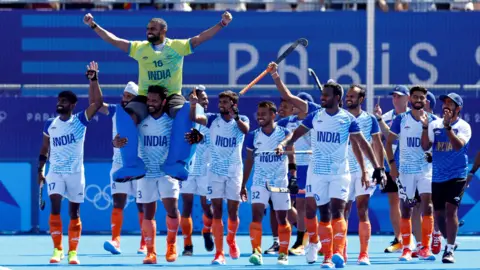
Hey there, fellow sports enthusiast. Imagine this: it’s a sweltering afternoon in Paris, the crowd’s roaring like a thunderstorm, and the Indian men’s hockey team is locked in a battle that could rewrite history. That’s the scene from the 2024 Olympics, where India defended their bronze from Tokyo with another gritty win, but oh, the gold dream? It’s still simmering, waiting for that explosive moment. As someone who’s followed Indian hockey since my school days—watching grainy videos of Dhyan Chand’s wizardry and cheering wildly during Tokyo’s bronze miracle—I’m here to take you on a deep dive into this epic journey. We’ll explore the highs, the heartbreaks, and why that gold feels so tantalizingly close. Buckle up; this isn’t just stats and scores—it’s the pulse of a nation’s passion.
The Golden Era: When India Ruled the Hockey World
Picture the 1920s: India steps onto the Olympic stage for the first time in Amsterdam, and bam—they snag the gold with a 3-0 final win over the hosts. Led by legends like Dhyan Chand, the team didn’t just play; they dazzled, scoring 29 goals without conceding a single one in the tournament. From 1928 to 1956, India won six straight golds, unbeaten in 30 matches. It was dominance personified, with scores like 24-1 against the USA in 1932. I remember my grandfather recounting tales of Balbir Singh Sr. scoring five in the 1952 final—pure magic that made hockey India’s national obsession.
This era wasn’t just about wins; it was cultural. Hockey fields became community hubs, and kids like me dreamed of emulating those heroes. The 1948 London gold, a 4-0 thrashing of Britain post-independence, symbolized resilience. By Melbourne 1956, India had cemented its legacy as the sport’s undisputed kings, with eight golds overall by 1980. But here’s the kicker: that dominance faded, leading to a 41-year medal drought. Yet, those stories? They fuel today’s fire.
The Dark Days: Drought and Determination
Fast forward to the 1980s: astroturf replaced grass, and India’s stick skills couldn’t keep up. The last gold came in Moscow 1980 amid a boycott-riddled Games, then… silence. No medals from 1984 to 2016, with heartbreaking near-misses like fourth places in Barcelona and Atlanta. I recall the agony of Sydney 2000, watching my favorite player Dhanraj Pillay fight valiantly, only to exit early. Politics, poor infrastructure, and shifting global dynamics hit hard—Pakistan and Australia rose, while India struggled.
But determination sparked revival. Coaches like Gerhard Rach and players like Viren Rasquinha rebuilt from the ashes. The 2000s saw sporadic highs, like the 2002 Champions Trophy bronze, but Olympics remained elusive. It was a grind—youth academies popped up, and by 2010, the team cracked the top 10 rankings. That drought? It taught grit. As a fan, those lean years made Tokyo’s bronze taste sweeter, reminding us that comebacks are the real gold stories. Light humor here: if hockey were a Bollywood film, this was the interval twist before the heroic return.
Revival and Resilience: The Path to Paris 2024
Enter the 2020s: under coach Graham Reid, then Craig Fulton, India rediscovered its mojo. The Tokyo 2020 bronze— a 5-4 thriller over Germany—ended 41 years of hurt, with PR Sreejesh’s saves etching legends. Harmanpreet Singh’s drag-flicks became weapons, and the team’s counter-attacks lethal. Qualifying for Paris via Asian Games gold in 2023 set the stage. I was glued to my screen during the Pro League wins, feeling the buzz build.
Paris 2024 was electric. In Pool B, India stunned Australia 3-2—their first Olympic win over the Kookaburras since 1972—thanks to Abhishek’s opener and Harmanpreet’s brace. A tough 1-1 draw with Argentina and a 2-1 loss to Belgium followed, but they topped second. The quarterfinal? Pure drama: down to 10 men after Amit Rohidas’s red card, India drew 1-1 with Great Britain and won 4-2 in shootouts. Sreejesh’s heroics shone again. Semi-final heartbreak: a 2-3 loss to Germany, despite Sukhjeet’s equalizer. But the bronze? A 2-1 comeback over Spain, Harmanpreet scoring twice, fulfilling back-to-back medals for the first time since 1972. Emotional? You bet—Sreejesh’s farewell had me tearing up, a veteran bowing out on a high.
This revival isn’t luck; it’s systemic—Hockey India’s investments in training, analytics, and youth programs. From 12th in rankings in 2018 to bronze medalists, India’s on an upward trajectory. As a storyteller, it’s like watching a phoenix rise, one penalty corner at a time.
Group Stage Breakdown
The group stage tested India’s mettle. Facing New Zealand first, a 3-2 win set the tone with early goals from Harmanpreet. Against Argentina, a late equalizer salvaged a point. Ireland fell 4-2, showcasing midfield dominance. The Australia upset was pivotal, breaking a 52-year jinx. Belgium’s loss hurt, but overall, seven points from five games positioned them well. It was balanced—offense firing, defense solid under Sreejesh.
Key Players Who Lit Up Paris
Harmanpreet Singh, the captain, was a beast with nine goals, including two in the bronze match. His drag-flicks? Unstoppable, earning him top scorer honors. PR Sreejesh, the “Great Wall,” made crucial saves, especially in shootouts—his retirement bittersweet. Young gun Abhishek scored vital openers, while Hardik Singh orchestrated plays from midfield. Jarmanpreet Singh added flair on the wings. These aren’t just players; they’re warriors. I once met a junior player inspired by Harmanpreet—says it all about their impact. Humorously, if hockey had MVPs, Sreejesh would win for “most saves that made fans pray less.”
Tactical Masterclass: Defending to Attack
Under Fulton, India mastered a “defend to win” ethos—high press, quick counters. In Paris, they conceded just 10 goals in seven matches, a defensive upgrade from Tokyo. Penalty corners converted at 40%, thanks to Harmanpreet’s precision. Against Great Britain, playing short-handed honed resilience. Comparisons? Unlike Australia’s power game, India’s blend of speed and strategy shone. Pros: Adaptability, youth energy. Cons: Occasional finishing woes. It’s evolved from Dhyan Chand’s flair to modern hybrid—effective, engaging.
The Gold Dream: Why It’s Within Reach
Ah, the unfulfilled dream—last gold in 1980, but Paris proved India’s ready. Back-to-back bronzes echo the 1968-72 era. For LA 2028, with talents like Vivek Sagar and a deep bench, gold beckons. Challenges? Tougher competition from Netherlands, Belgium. But investments in SAI centers and foreign coaches position well. Personally, after Tokyo’s joy, Paris felt like progress. Emotional appeal: Imagine the streets erupting in celebration—that’s the dream. Light jab: If they win gold, even cricket fans might switch channels!
Comparison: India vs Top Rivals
| Team | Olympic Golds | Recent Form | Strength |
|---|---|---|---|
| India | 8 | Bronze 2024, Bronze 2021 | Counter-attacks, PC conversion |
| Netherlands | 3 | Gold 2024 | Possession play, fitness |
| Germany | 4 | Silver 2024 | Structured defense, experience |
| Australia | 3 | 4th 2024 | Power hitting, depth |
India’s edge? Resilience in knockouts. Where to watch future games? FIH site or JioCinema for streams. Best tools for aspiring players: Kookaburra sticks, Gryphon pads—grab from Amazon India.
Pros and Cons of India’s Olympic Journey
- Pros:
- Unmatched history: 13 medals, most ever.
- Youth surge: Average age 26 in Paris, blending experience.
- Global inspiration: Revived national pride.
- Tactical evolution: From grass to astroturf mastery.
- Cons:
- Long gold drought: 44 years, pressure mounts.
- Infrastructure gaps: Rural talents need more academies.
- Injury risks: High-intensity play demands better recovery.
- Rivalry intensity: Pakistan matches add emotional toll.
This balance keeps the dream alive—flaws fuel growth.
People Also Ask (PAA)
How many Olympic gold medals has India won in hockey?
India has clinched eight Olympic golds in men’s hockey: 1928 Amsterdam, 1932 Los Angeles, 1936 Berlin, 1948 London, 1952 Helsinki, 1956 Melbourne, 1964 Tokyo, and 1980 Moscow. These victories, especially the six consecutive from 1928-1956, showcase unparalleled dominance. Dhyan Chand’s hat-tricks in finals remain legendary, inspiring generations. For more, check Olympics.com history.
When was India’s last hockey gold at the Olympics?
The last gold came in 1980 at Moscow, a 4-3 thriller over Spain amid boycott controversies. It capped a storied era before the drought. Post that, bronzes in 2021 and 2024 signal revival. Fans still chant for another—will LA 2028 deliver? Relive it via Hockey India archives.
What is the history of Indian hockey in the Olympics?
From debut gold in 1928 to 13 total medals, India’s tale is epic. Six straight golds defined the golden era, followed by struggles on astroturf. Revival hit with Tokyo bronze after 41 years. Paris added another, totaling eight golds, one silver, four bronzes. It’s resilience personified—check Wikipedia for full squads here.
Why is Indian hockey important in Olympics?
Hockey’s India’s most successful Olympic sport, with 13 medals fueling national pride. It ended 96-year wait for non-hockey team medals in 2024. Economically, it boosts tourism via events like Asian Games. For youth, it’s aspirational—best training tools? Join academies via Sports Authority of India.
FAQ
What strategies helped India defend their medal in Paris 2024?
India’s “defend deep, attack fast” tactic shone, with 40% penalty corner success. Sreejesh’s goalkeeping and Harmanpreet’s leadership were key. Training with mental coaches like Paddy Upton built resilience. For similar tips, explore FIH coaching resources.
How can aspiring players train for Olympic-level hockey?
Start with basics: join local clubs, focus on fitness via apps like Nike Training. Best tools? Adidas sticks for drag-flicks, protective gear from Decathlon. Watch tutorials on YouTube—consistency is gold. Internal link: See our revival section for inspiration.
Where to get tickets for future India hockey matches?
For international events, book via FIH Hockey. Domestically, Hockey India League tickets on BookMyShow. Pro tip: Early bird for Olympics qualifiers saves bucks.
Is India favored for gold in 2028 Olympics?
Yes, with back-to-back bronzes and young talent, odds are good. Rankings at No. 5, but LA’s home-like support? Game-changer. Track progress on Olympics.com.
How did the red card affect India’s quarterfinal?
Amit Rohidas’s red left them at 10, but unity prevailed—1-1 draw, shootout win. It tested depth, proving squad strength. Emotional rollercoaster, but victorious.
Whew, what a ride through India’s hockey saga. From golden glory to resilient bronzes, the dream of that ninth gold burns bright. As I wrap up, remember: sports isn’t just wins; it’s the fight, the stories, the connections. What’s your favorite hockey memory? Share below—let’s keep the conversation going. Until LA 2028, keep defending that dream!